Long-distance Valentine’s ideas
Long-distance Valentine’s advice is mostly the normal list with the word "virtual" in front of it. Virtual dinner, virtual film night, virtual gift. The trouble is that distance does not just move the same evening onto a screen — it removes the two things the day is normally built from, which are being in a room together and handing something over. Anything that works has to replace those rather than imitate them.
What distance actually removes
It removes the shared hour. In the same city you get an evening with a beginning and an end. Apart, you have two evenings that may not overlap at all, and the one you both get is whatever the timezone leaves you — often a tired forty minutes rather than a night.
It removes the object. Half of Valentine’s is physical: the card handed over, the flowers that turn up, the thing in a bag. Posting works and it takes days, and the days are the part people forget to count.
It removes the spontaneity, which is the loss nobody mentions. Everything long-distance has to be arranged, and arranging it is the opposite of the surprise the day is supposed to contain. You cannot fix that, so plan for it: build the surprise into something that arrives on its own, rather than into a moment you both had to diary.
It does not remove the point. The day exists to make someone feel chosen on purpose. That survives any distance. It simply cannot be made of flowers this year.
Ideas that survive the distance
Post something real, and tell them it is coming. The warning is not a spoiler — it is what stops a parcel being opened next to the bins on a Tuesday. Say "something is arriving, do not open it until Saturday" and you have built a shared moment out of a cardboard box.
Arrange the call rather than surprising them with it. A surprise call catches someone mid-anything; an arranged one lets them be somewhere they can hear you, in a room they chose. Less cinematic, considerably kinder.
Start the same thing at the same second. A film, an album, an episode. It is the closest this gets to sitting next to each other, and it works precisely because neither of you is performing — you are just both there.
Order food to their actual door. The single most effective long-distance gesture, because it arrives hot in a place you cannot reach and requires you to know what they like.
Send a voice note instead of a paragraph. Your voice does the thing your typing keeps flattening, and over distance a recorded voice is the nearest thing to presence that fits in a phone. Record it once.
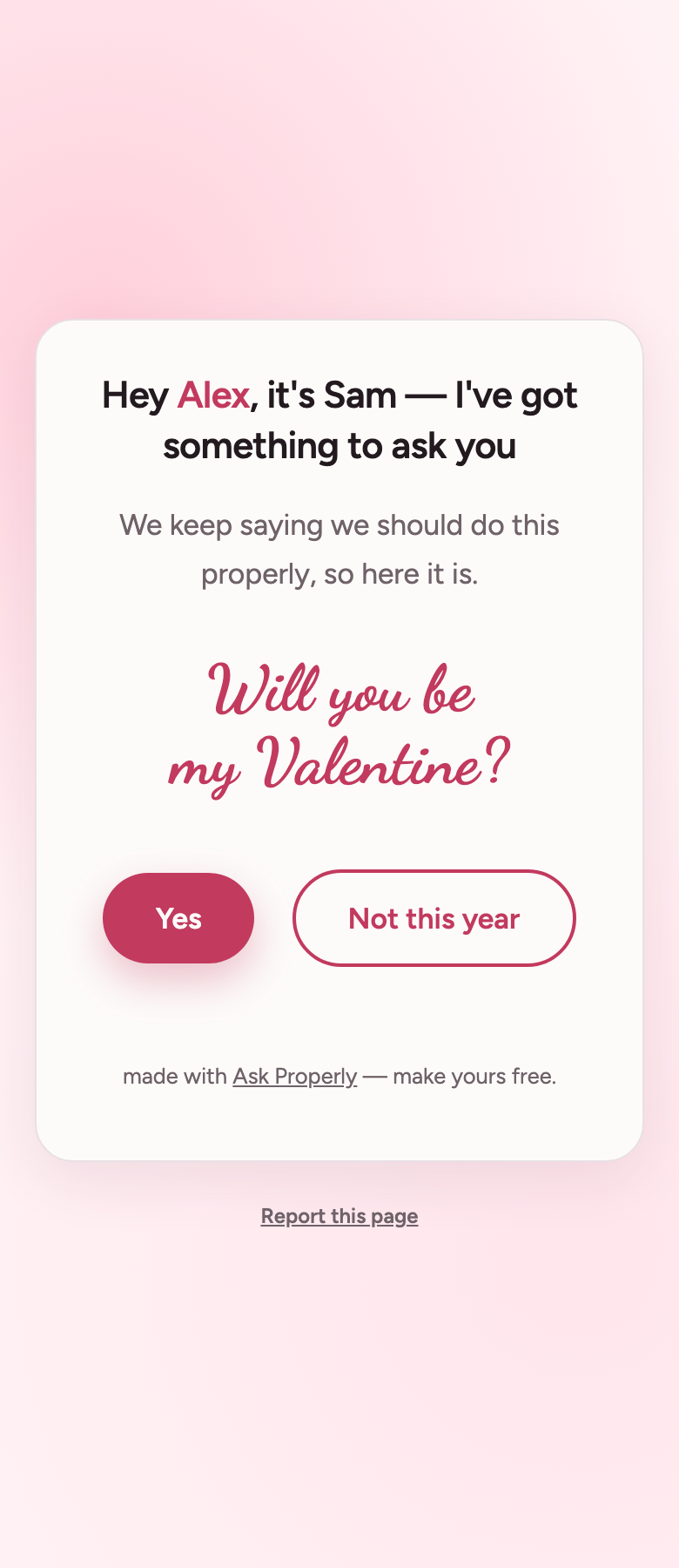
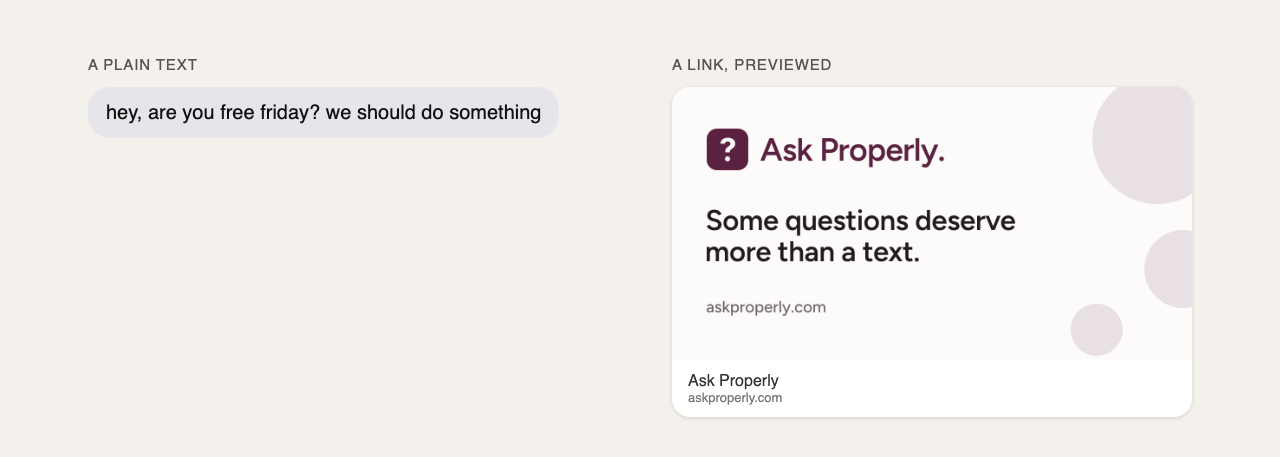
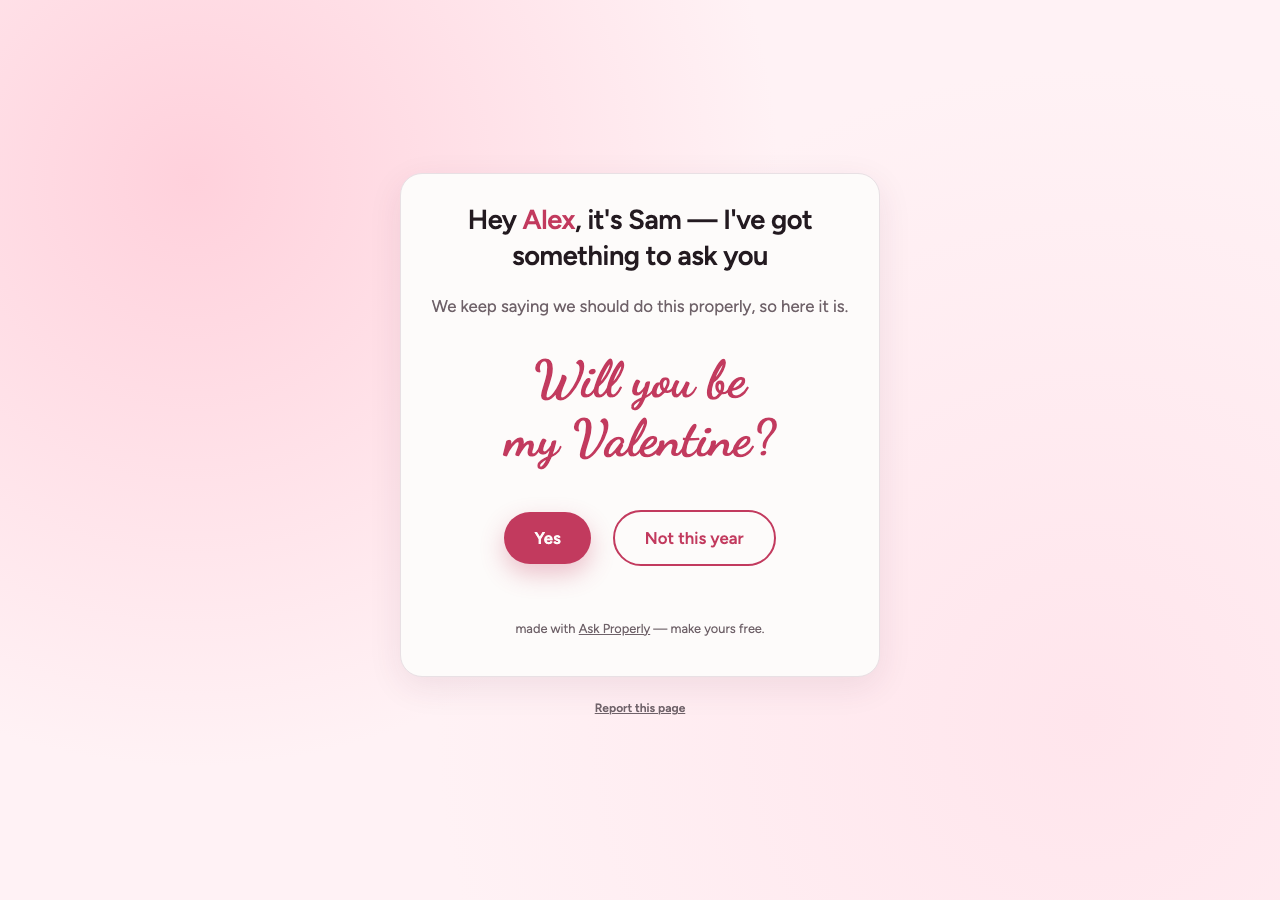
Send the question as a page. If what you actually want to do is ask — not plan, ask — a page carries the question on its own, arrives as something they open rather than a message that scrolls away, and comes back as a yes or no they tap. It is the one idea on this list that needs no postage, no overlap in your schedules, and no nerve at the moment of asking. The Valentine page below makes one in about a minute.
What to skip: a surprise visit, unless you are certain about their week. The fantasy version ends in a doorway; the real version ends with them on a shift you did not know about.
The hour is the part people get wrong
Work out their local time for the moment you intend to send, and write it down rather than holding it in your head. Most long-distance Valentine’s mistakes are arithmetic, not romance.
Watch the date boundary, which is the error that actually bites on this particular day. If you are far enough apart, your fourteenth is their thirteenth or fifteenth, and a message timed for midnight your side lands on the wrong day entirely. The fourteenth is the whole premise here, so check which one you are aiming at.
Aim for their early evening rather than their morning. A question or a gift that lands at eight in the morning competes with getting out of the door; the same thing at seven in the evening gets their attention.
Account for your own hour too. There is a specific misery in sending something and sleeping through the reply. If the answer will arrive while you are asleep, arrange it so the answer waits for you — putting an email address in when you build a page does exactly that.
The posting deadline nobody checks
If anything is going in the post, count backwards from the fourteenth and add slack. International post in early February is slower than the website says, because the website is describing an average week and this is not one.
A week is the minimum for anything crossing a border, and two is comfortable. Inside one country, three or four days is usually fine. If you are reading this in the week of the fourteenth and the parcel has not gone, it is not going to arrive — switch to something that does not travel.
Customs forms are the other trap. Anything of value crossing a border needs a declaration, and a parcel held at customs arrives in March with a charge attached, which is the opposite of a gift.
So have the thing that does not need post ready as well. Something you can send on the day, that arrives instantly, and that does not depend on a courier having a good week.
What to say when you cannot be there
Name the distance once, early, then stop. "I wish I was there" is one honest sentence. Said four times it turns the day into an apology, and they end up reassuring you.
Then say the thing only distance could have taught you. The call you both stayed on too long, the thing you save up to tell them, the hour you keep free. That line is the entire substance, and nothing in the post replaces it.
Avoid promising the next visit as the gift, unless the date is already booked and paid for. A vague "soon" costs you nothing to say and is the thing most likely to be remembered as a disappointment.